Judith Campisi
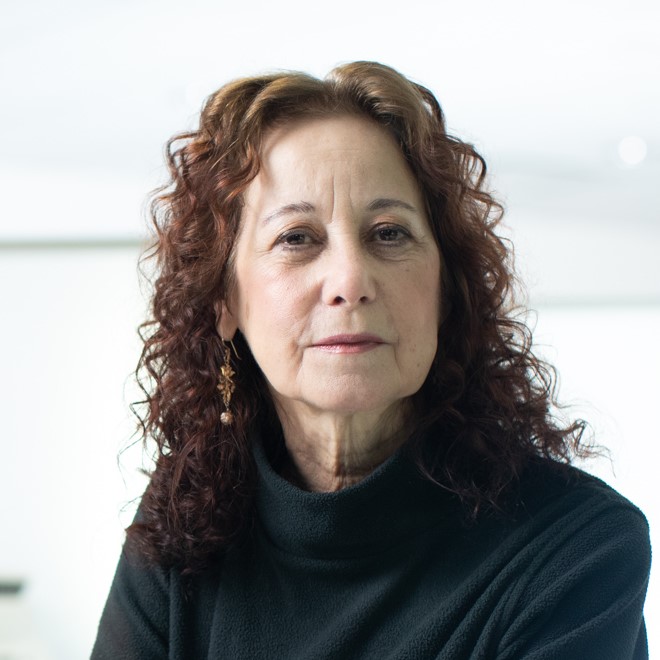
Judith Campisi (1948–2024) was an American cell and molecular biologist who established cellular senescence as a physiological bridge between tumor suppression and tissue aging. She was a professor at the Buck Institute and a senior scientist at Lawrence Berkeley National Laboratory.
Career and honors
Campisi received her PhD in biochemistry from the State University of New York at Stony Brook and conducted postdoctoral research at Harvard Medical School. After teaching at Boston University Medical School, she was recruited to Lawrence Berkeley National Laboratory in 1990 by Mina Bissell and joined the Buck Institute in 2002, leading her laboratory until her death in January 2024. She also co-founded Unity Biotechnology to translate senescence-targeting drugs.
For her work linking tumor suppression and aging biology, she was elected to the National Academy of Sciences and received the 2010 Ipsen Foundation Longevity Prize and the inaugural 2015 Olav Thon Foundation Prize in Natural Sciences and Medicine.
Antagonistic pleiotropy of senescence and the SASP
Campisi argued that cellular senescence acts as an evolutionary example of antagonistic pleiotropy:12
- Tumor-suppressive arrest. Irreversible cell-cycle arrest triggered by telomere attrition, DNA damage, or activated oncogenes blocks damaged cells from proliferating into tumors during reproductive life.1
- The senescence-associated secretory phenotype (SASP). Persistent senescent cells remodel surrounding tissue through paracrine secretions. Experiments led with Ana Krtolica demonstrated that senescent human fibroblasts stimulate neighboring premalignant and malignant epithelial cells to proliferate and form tumors in vivo.3 Working with Jean-Philippe Coppé, Campisi characterized this secretome—comprising inflammatory cytokines such as IL-6 and IL-8, growth factors, and matrix proteases—as the senescence-associated secretory phenotype (SASP), explaining how arrested cells can promote chronic inflammation and cancer in older tissues.45
Campisi’s work underpins therapeutic interest in senolytics and connects directly to debates over the tumor suppressor theory of aging.
See also
References
Footnotes
- Campisi J. Senescent cells, tumor suppression, and organismal aging: good citizens, bad neighbors. Cell. 2005;120(4):513–522. doi:10.1016/j.cell.2005.02.003. ↩↩2
- Campisi J. Aging, cellular senescence, and cancer. Annual Review of Physiology. 2013. doi:10.1146/annurev-physiol-030212-183653. ↩
- Krtolica A, Parrinello S, Lockett S, Desprez PY, Campisi J. Senescent fibroblasts promote epithelial cell growth and tumorigenesis: a link between cancer and aging. Proceedings of the National Academy of Sciences. 2001. doi:10.1073/pnas.211053698. ↩
- Coppé JP, et al. Senescence-associated secretory phenotypes reveal cell-nonautonomous functions of oncogenic RAS and the p53 tumor suppressor. PLoS Biology. 2008. doi:10.1371/journal.pbio.0060301. ↩
- Coppé JP, Desprez PY, Krtolica A, Campisi J. The senescence-associated secretory phenotype: the dark side of tumor suppression. Annual Review of Pathology: Mechanisms of Disease. 2010. doi:10.1146/annurev-pathol-121808-102144. ↩